
Overview
The Kodak DCS 660 was flown by NASA astronauts across 3 identified missions, in NASA service 2001, contributing 457 identifiable frames to the public astronaut photography archive. Traced by manufacturer serial number, at least 2 physical bodies have been identified in the public archive. The Kodak DCS 660 is a 6 MP CCD released by Kodak in 1999.
Body S/N K660C-01411 is the most heavily documented in the archive, contributing 440 identifiable frames across 2 missions including STS100, STS105. The other 1 identified body appears in more targeted mission windows, detailed below.
Lens metadata for this model is limited in NASA's public releases (Adobe processing strips some manufacturer MakerNote fields). Where lens identification is available in the archive, it appears below.
Exemplar photographs
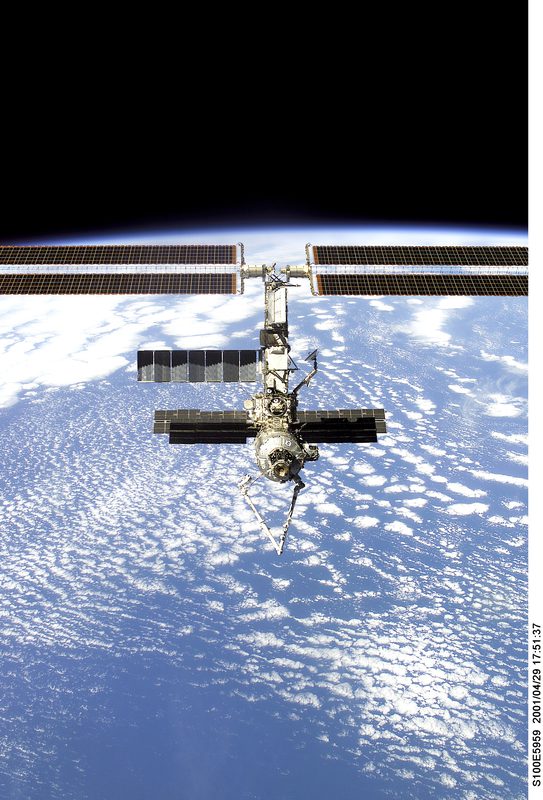
Additional representative frames captured by the Kodak DCS 660 bodies in orbit. Full resolution is available at the linked NASA archives.
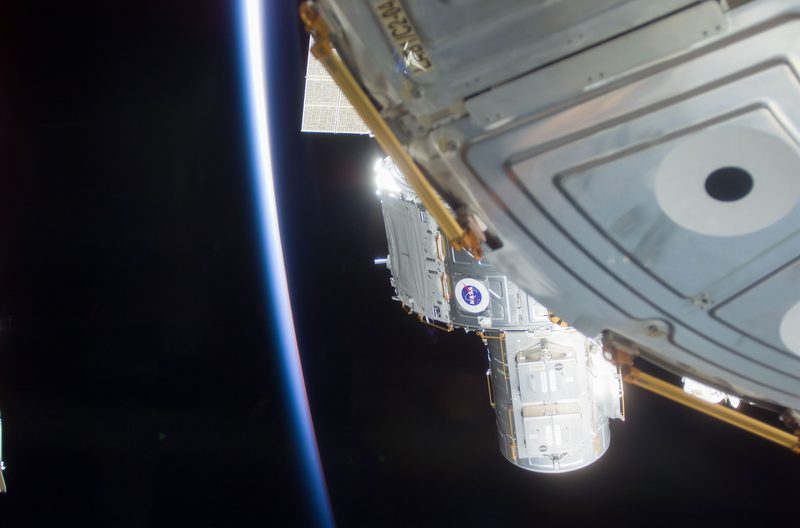
ISS and Earth horizon as photographed during Space Shuttle mission 104
In NASA service
The DCS 660 was announced in October 1999 as part of Kodak's DCS 6XX series, integrating the DCS 520 electronics with a Nikon F5 body in what Kodak's engineering retrospective describes as a “bulletproof magnesium housing.” The M16 six-megapixel imager captured 2008×3040 files at ISO 80–200. The color 660c was discontinued in July 2001 and the monochrome 660m in December 2001, superseded by the DCS 760, which retained the F5 body and M16 imager but adopted the newer Pro 3 architecture with Firewire transfer and dual PCMCIA card slots.1
NASA astronaut photography from ISS Expedition and Space Shuttle missions in 2001 includes frames traceable to at least two DCS 660C bodies by manufacturer serial number, placing the 660 within the Nikon F5 + Kodak DCS lineage that Nikon's 2010 retrospective identified as the primary NASA digital platform from 1998 through the transition to the D2Xs around 2007. The 2010 retrospective's Kodak coverage is not comprehensive, and it does not enumerate the 660 specifically — its NASA service is documented here primarily through EXIF metadata rather than published Kodak or Nikon accounts.2
- McGarvey, Jim. The DCS Story: 17 years of Kodak Professional digital camera systems, 1987–2004. Kodak, June 2004.
- Gotō, Tetsuro. “宇宙用ニコン・スペースカメラの開発” [Development of Nikon Space Camera]. Journal of the Society of Photographic Science and Technology of Japan 73, no. 2 (2010): 65–69.
Commercial availability
Kodak DCS 660 on the used market
The bodies documented in this registry are the specific units NASA sent to orbit. The commercial market carries the same Kodak DCS 660 model at accessible prices for collectors, photographers, and researchers. Listings shown are the same model, not the specific bodies flown.
CARES LLC participates in the eBay Partner Network. Purchases via this link may generate commission at no additional cost to you. The listings shown are the same Kodak DCS 660 model used by NASA, not the specific bodies flown.
Bodies identified
Each identifiable body of the Kodak DCS 660 that appears in NASA's public astronaut photography archive, sorted by frame count.